

Lehrstuhl EP2 Uni Bayreuth

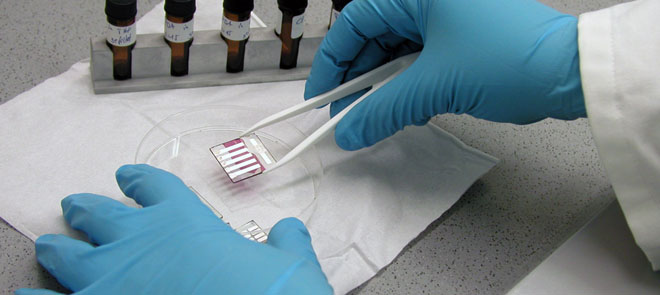
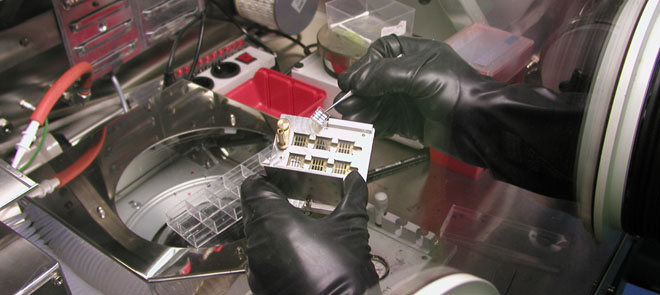
Our research is concerned with the optical and electronic processes that take place in organic semiconductors. In contrast to most inorganic semiconductors, organic materials can be processed easily, either by thermal evaporation or by from solution. This opens up new, highly promising manufacturing routes for the low-cost production of opto-electronic devices such as light-emitting displays (LEDs), solar cells and transistors.

In order to advance organic devices it is imperative to understand very clearly how excited states or charges are generated, and what determines their energy and extent, how they migrate through the semiconductor, and how they decay.

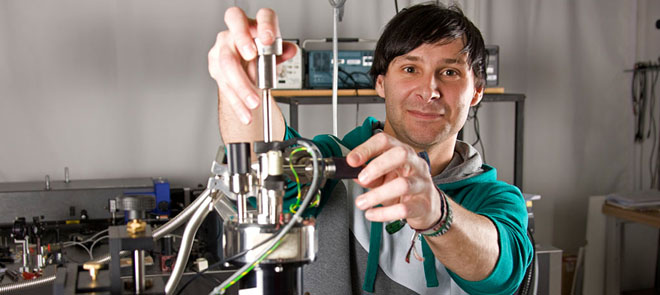
When addressing these issues we focus in particular on the relationship between electronic, chemical and morphological structure. We therefore use a range of time-resolved spectroscopic techniques in combination with electrical and structural studies.

Prof. Dr. Anna Köhler

The research group is lead by Professor Anna Köhler

Teaching
Research
Publications

Research News

Finite Size Effects on Light-Induced Correlated Ionic and Electronic Transport in Mixed Halide Perovskites
13. Februar 2026

Mixed halide perovskites often undergo reversible phase segregation under illumination, yet the exact underlying mechanism and the material properties affecting this process remain unclear. By combining time-resolved photoluminescence (TRPL) with in situ X-ray diffraction (XRD) under illumination, we show that segregation kinetics and the thermodynamic limit of segregation under illumination in MAPbI1.5Br1.5 are not intrinsically linked. The segregation rate increases linearly with the defect density inferred from TRPL. In contrast, the equilibrium extent of segregation is independent of defect density but instead decreases with reducing crystallite size down to a critical, finite-size threshold of ∼40 nm, below which segregation is suppressed. Defect passivation using the ionic liquid BMIMBF4 slows the segregation kinetics but does not affect equilibrium limits. These findings establish crystallite size as a thermodynamic constraint and defects as kinetic mediators, outlining considerations for designing photostable mixed halide perovskites.

Seawater to Sustainable Fuel: Sunlight-Driven Green Hydrogen Generation with an Atomically Dispersed Photocatalyst
18. November 2025

Green hydrogen is widely regarded as a key to a sustainable future, offering a clean and flexible fuel option for decarbonizing the energy, transport, and industrial sectors. While photocatalytic approaches are known for generating hydrogen directly from water, most existing methods require (over)stoichiometric amounts of sacrificial reagents, which is far from ideal for the production […]

Mechanistic Insights into the Light-Driven Difunctionalization of Alkenes with a Sulfonyl-Based Reagent: A Catalyst-Free Approach
18. November 2025

Visible-light-mediated difunctionalization of nonactivated alkenes offers a sustainable and efficient strategy for constructing diverse molecular frameworks relevant to medicinal chemistry, polymer science, and synthesis of fine chemicals. While established approaches─such as photoredox catalysis, energy transfer (EnT), and ligand-to-metal charge transfer (LMCT)─have demonstrated success, they typically require external photocatalysts to achieve high reactivity. Alternatively, electron donor–acceptor […]